
A Homeowner’s Guide to Tree Reports: Clear, Practical, and Built for Real Decisions
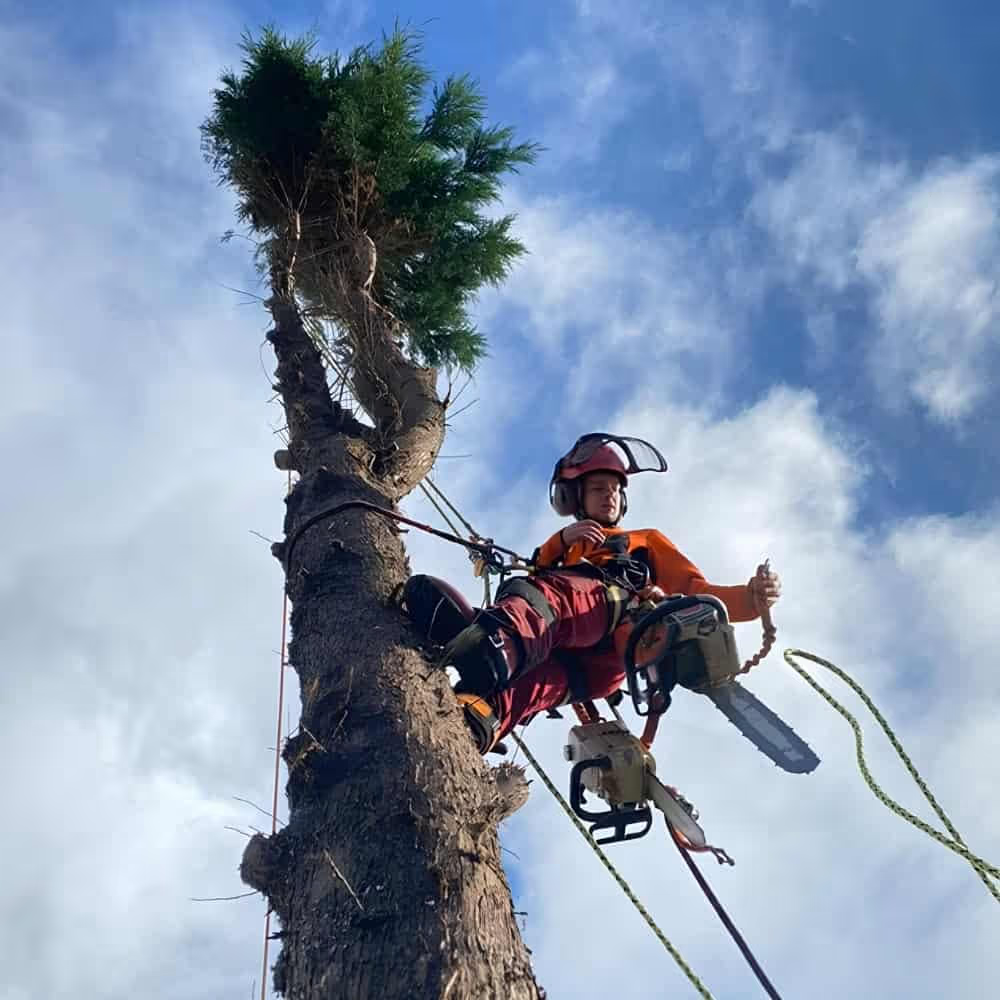
A Homeowner’s Guide to Tree Reports: Clear, Practical, and Built for Real Decisions
Booking a tree survey as a homeowner shouldn’t be confusing. Last month in Chorlton I assessed a mature ash over a driveway—tight access, kids’ bikes beneath. Using the ISA’s TRAQ method, I rated the risk, set a light reduction with deadwood removal, and a 12-month review. One visit, clear priorities, no guesswork.
Why I use TRAQ (and why it helps you)
I base reports on the ISA’s Tree Risk Assessment Qualification (TRAQ) so decisions are consistent and defensible. Read more at the ISA, the Arboricultural Association, NTSG and HSE. Where works are specified, I align with BS 3998 good practice (see the Arboricultural Association).
See priorities at a glance
Every tree appears on a simple site plan, colour-coded by risk:
- Red = High
- Yellow = Moderate
- Green = Low
Alongside risk, I grade condition (Good / Fair / Poor) so health is obvious too. If paint marking would aid identification, I’ll only do this with consent and after checking protections (see Planning Portal: works to trees).
Two tables that make action easy
- Risk-ordered schedule (not numerical): urgent items at the top, with timeframes, so work can start safely and efficiently.
- Numerical walk-round schedule: trees listed in ID order so a tree surgeon can walk the garden once, in sequence, without missing a tag.
Used together, crews plan strategically and execute methodically.
A summary you’ll actually read
Up front, a plain-English page lists mitigation—prune, reduce, remove, cable/brace, monitor, re-inspect—by High → Moderate → Low with clear specs and dates. On sites with very few targets (low people/property exposure), I prioritise by condition to keep decisions proportionate and costs sensible.
What each tree entry includes (so quotes are like-for-like)
- Tree ID matching the map tag, plus location/access notes
- Species and key dimensions (DBH, height, spread)
- Defects/observations explained simply, plus relevant site constraints
- A short TRAQ rationale (likelihood of failure/impact + consequence)
- Risk band (red/yellow/green) and condition (good/fair/poor)
- Recommended work with specification and timeframe
- Re-inspection / monitoring interval (e.g., after named storms)
- Linked photos per Tree ID, so identification is straightforward
Why homeowners like this format
- Clarity: priorities are instant on the colour-coded map.
- Confidence: TRAQ gives a consistent tree risk assessment you can explain to neighbours or insurers.
- Value: risk-first, condition-led exceptions = proportionate spend.
- Clean quotes: contractors price accurately from the dual schedules.
Safety & compliance: urgent items can be scheduled immediately, with a record of decisions.

Speak to a trusted professional tree surgeon about your trees
Whether you need advice, ongoing maintenance or professional tree work, we offer a free, no-obligation site visit to assess your trees and discuss the best course of action.