
What a Tree Surgeon Wants to See in a Tree Report (So Work Starts Fast)
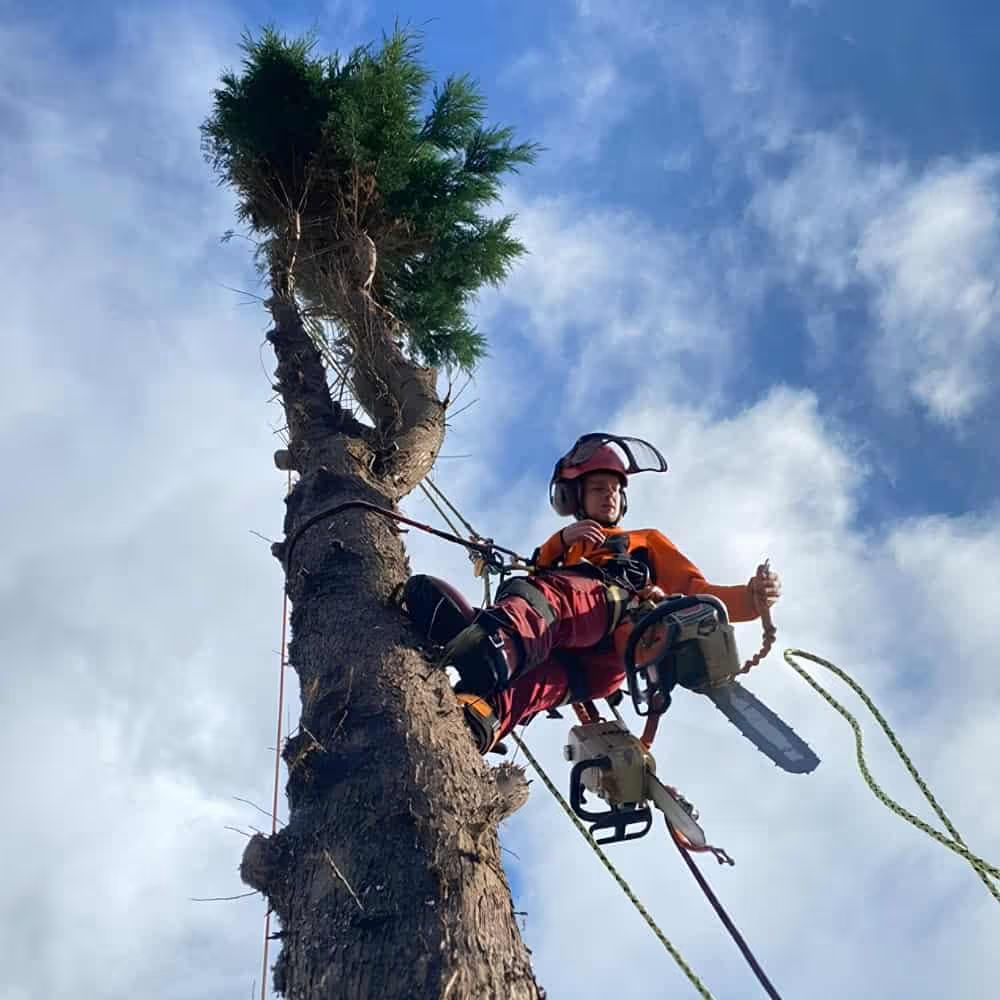
What a Tree Surgeon Wants to See in a Tree Report (So Work Starts Fast)
Last week in Stockport I reviewed a mature lime over a bus stop. On paper it was “routine”; on site, a long lateral had heavy end-weight and fresh brackets at the buttress. We set a light reduction, removed deadwood, and booked a 12-month review. That’s the moment a contractor-ready tree report earns its keep: clear priorities, no guesswork.
Why I build reports around TRAQ
I structure reports to the ISA’s TRAQ framework (Tree Risk Assessment Qualification) because it’s consistent, transparent, and recognised internationally. Read more: ISA TRAQ, Arboricultural Association, NTSG, HSE.
A map that tells the story at a glance
Every tree appears on a simple plan, colour-coded by risk:
- Red = High
- Yellow = Moderate
- Green = Low
Condition sits alongside risk: Good / Fair / Poor. Crews can stage plant, traffic control and access in minutes. (Where helpful, I’ll mark the correct stem with a discreet paint dot only with client consent and after checking protections—see TPO/CA guidance via the Planning Portal.)
Two tables, two ways to work—fast and tidy
- Risk-ordered schedule (non-numerical): pushes the urgent items to the top so teams can act immediately.
- Numerical walk-round schedule: lists trees by ID so a tree surgeon can walk the site once, in order, without missing a tag or backtracking.
Used together, crews can plan strategically and execute methodically.
A summary that actually drives action
Up front you’ll get a one-page list of mitigation in priority order (High → Moderate → Low) with timeframes and short specifications—prune, reduce, remove, cable/brace, monitor, re-inspect—so the next step is unmistakable. On very low-target sites I’ll prioritise condition instead, to keep decisions proportionate and costs sensible.
The practical details contractors expect
Each entry includes:
- Unique Tree ID (matches tags and plan labels) and location/access notes
- Species/common name and key dimensions (DBH, height, spread)
- Defects/structure and relevant site constraints
- A brief TRAQ rationale (likelihood of failure/impact + consequence)
- Risk band (red/yellow/green) and condition (good/fair/poor)
- Mitigation spec with priority timeframe
- Re-inspection interval and any monitoring triggers (e.g., after named storms)
- Photos tied to Tree IDs for easy matching on site
Why this format works for tree surgeons
- Faster mobilisation: the risk list focuses crews on what matters first.
- Fewer errors: the numerical schedule supports a clean start-to-finish walk-round.
- Safer outcomes: colour-coded maps make high-risk trees unmissable.
- Better communication: TRAQ reasoning builds trust with clients and duty holders.
- Proportionate management: low-target sites aren’t over-serviced.
Accessible, defensible, real-world
The blend of TRAQ-based risk, a colour-coded plan, dual schedules and a front-loaded summary turns assessment into clear instructions a tree surgeon can use immediately. It’s accessible for clients, defensible for duty holders (aligned with NTSG guidance and HSE expectations), and practical for delivering safe, efficient work on site. Where works are specified, I align with BS 3998 principles (good arboricultural practice; see the Arboricultural Association for guidance).
Meta description (160 words)
Need a contractor-ready tree report in the UK? This page shows how I structure reports a tree surgeon can use immediately, built on the ISA’s TRAQ (Tree Risk Assessment Qualification) for consistent, defensible tree risk assessment. You’ll see how a colour-coded site map (red/high, yellow/moderate, green/low), a risk-ordered schedule, and a numerical walk-round schedule turn assessment into clear instructions. I grade condition (good/fair/poor), list mitigation with timeframes, and include photos, IDs, access notes and re-inspection dates, so crews mobilise fast and don’t miss a tree. The format supports BS 3998-aligned work and duty-of-care expectations from NTSG and HSE, with links to ISA TRAQ, the Arboricultural Association, NTSG and HSE for further reading. Whether you manage a single site or an estate, this contractor-friendly tree risk report saves time, reduces errors, improves safety and keeps costs proportionate. Ideal for tree surgeons, facilities managers, schools, housing providers and local authorities. Available across England, Wales, and Greater Manchester.

Speak to a trusted professional tree surgeon about your trees
Whether you need advice, ongoing maintenance or professional tree work, we offer a free, no-obligation site visit to assess your trees and discuss the best course of action.